
Moroccan Couscous: The Ultimate Guide to a Friday Masterpiece
For another hearty dinner, try our Ultimate Spaghetti and Meatballs.

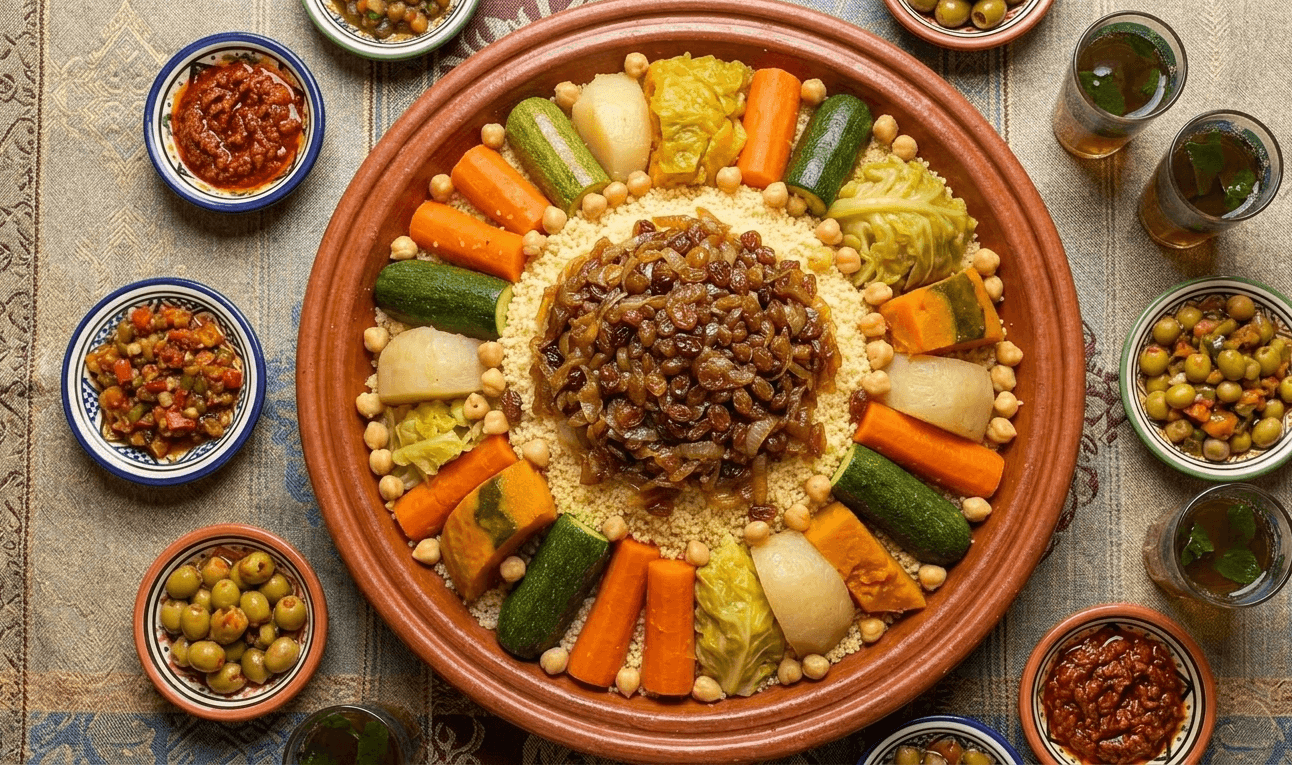
Moroccan Couscous is the soul of Moroccan cuisine. It’s a dish of patience, layers of flavor, and incredible textures. This recipe features tender meat, fluffy hand-steamed semolina, and the essential Cabbage that makes the broth truly authentic.
Moroccan Couscous Ingredients
The Protein: 1 kg (2.2 lbs) of Lamb or Beef (shanks or shoulder).
The Grain: 1 kg of Medium-grain Couscous.
The “Heart” (Cabbage): 1 small head of green cabbage (cut into quarters).
The Root Veggies: 4 Carrots and 3 Turnips (peeled and halved).
The Soft Veggies: 2 Zucchinis and a large wedge of Red Pumpkin (Squash).
Legumes: 1 cup of chickpeas (soaked overnight).
Aromatics: 1 large onion (sliced) + 2 grated tomatoes.
The Bouquet: A tied bunch of fresh Cilantro and Parsley.
The Spices: 1 tbsp Ginger, 1 tbsp Turmeric, 1 tsp Black Pepper, Salt, and a pinch of Saffron.
The Finisher: 1 tbsp Smen (Moroccan preserved butter) or Olive Oil.
For another comforting classic, try our Marry Me Chicken.
How to Make Moroccan Couscous
Follow us on Facebook for more recipes.
- The Base (The “Marka”)
In the bottom of your Couscoussier, heat some oil and brown the meat with the onions and spices. Once the meat is seared, add the grated tomatoes, chickpeas, and the herb bouquet. Pour in about 2.5 liters of water and bring to a boil.

- Preparing the Cabbage & (RootsRoot Vegetables)
Add the Cabbage quarters and the Carrots/Turnips to the pot immediately. These take the longest to cook and will infuse the broth with that signature sweetness.

- The Three Steams (The Secret to Fluffiness)
Steam 1: Dampen the dry couscous with a little oil and water. Place in the steamer basket. Once steam escapes through the top, cook for 15-20 mins.
Steam 2: Remove the grains, sprinkle with salted water, and rake through with a fork (or your hands if you’re brave!) to break any lumps. Return to the steamer.
Note: At this stage, check your meat and add the Zucchini and Pumpkin to the pot.
Steam 3: The final steam. Once the steam rises again, the couscous is ready. Toss it with a bit of butter or Smen for that silky finish.

Follow Riad Kitchen on Instagram for more Moroccan recipes.
- The Presentation
Mound the couscous in a large clay bowl. Make a well in the center for the meat. Arrange the Cabbage quarters at the base, followed by the carrots, turnips, and pumpkins on top. Pour the golden broth generously over everything.
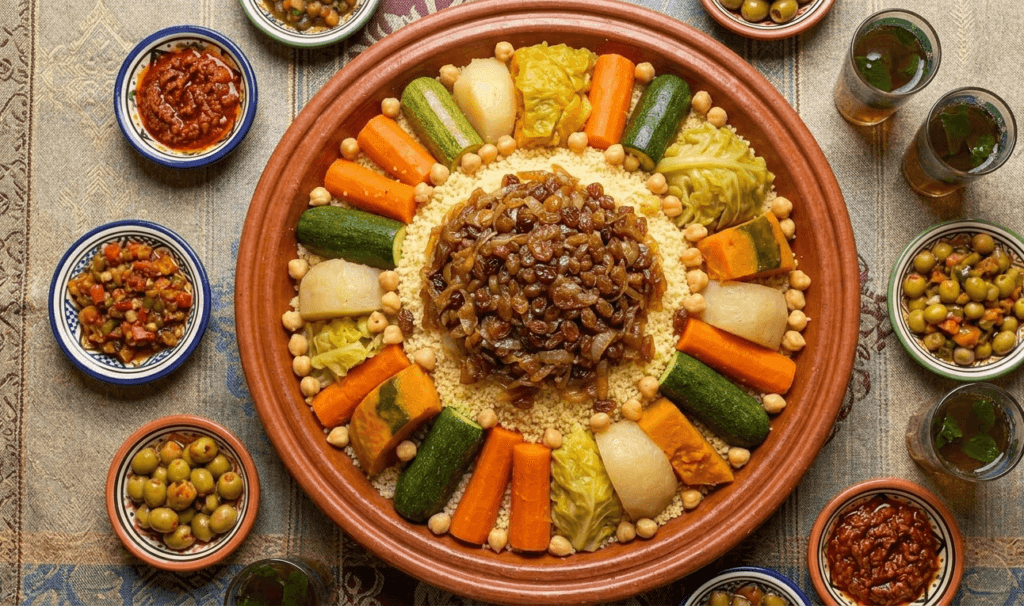
Serving Moroccan Couscous
Serve this Moroccan Couscous mounded in a large clay bowl, with a well in the center for the meat and the vegetables arranged on top.
The Soul of the Friday Table: Our Couscous Tradition
In Morocco, Couscous is far more than just a dish; it is a weekly ritual that weaves families together. I remember the rhythmic sound of my grandmother’s hands as she “rolled” the semolina in a large clay Gsaa, a craft she perfected over decades. The house would fill with the intoxicating aroma of saffron, ginger, and slow-simmering broth long before the first guest arrived.
For us, Friday wasn’t just the end of the week; it was “Couscous Day.” It was the time when the entire household, and often the neighbors, gathered around one massive, steaming platter. This recipe is an inheritance of that warmth. It represents the patience required to steam the grains three times to achieve that cloud-like fluffiness, and the love put into selecting the freshest seven vegetables from the local market.
Whether it was a celebration or a simple family gathering, the sight of the Tfaya (sweetened onions and raisins) glistening on top of the savory vegetables always signaled a moment of peace and gratitude. Sharing this recipe isn’t just about the ingredients; it’s about inviting you to experience a piece of Moroccan hospitality and the timeless tradition that turns a simple meal into a sacred bond.
The Secret to the Perfect Fluffy Grain
The true mastery of Moroccan Couscous lies not in the toppings, but in the texture of the grain itself. To achieve that signature light and airy consistency, the secret is the triple-steaming process. Never rush the hydration; we slowly sprinkle salted water and olive oil between each steam, gently separating the grains with our fingertips.
This traditional technique ensures that the couscous absorbs the rich, aromatic broth without becoming heavy or clumped. It is this dedication to the process that transforms humble semolina into a gourmet foundation for the seven vegetables and tender meat.
This Moroccan Couscous is ready to serve.